
Which Doctors Offer Telehealth? Medicare Data by Specialty
About 1 in 5 Medicare clinicians offer telehealth; endocrinology and oncology lead.
Saved on this device only.
Learn
Our doctor data guides explain the U.S. health care workforce with real numbers. They cover how to choose a specialty and a residency, how physician pay and RVUs work, which drugs Medicare patients fill, how drug companies pay doctors, and where people struggle to find care.
Every guide starts with public data. For example, the RVU guides use Medicare claims and the CMS fee schedule. Then each article links to the maps and pages behind its numbers, so you can check them yourself. In addition, each guide names its sources at the end.
Our guides are general information, not medical, legal or financial advice. Therefore, check important details with your program, employer or clinician. Most of our data comes from CMS (opens in a new tab) and the Census Bureau. Read our methodology to see how we build each number.
Who writes the doctor data guides? The contact.doctor editorial team writes them from public government data. We do not accept payment from companies, hospitals or doctors for coverage.
How often are the guides updated? We update the numbers when the federal data behind them is updated, usually once a year. In addition, each guide shows the data year in its sources.
Can I suggest a topic? Yes, please use our contact page. For example, you can suggest a specialty, a drug or a state you would like us to cover.
Our data stories turn public government records into maps and plain-language analysis of the U.S. health-care workforce. Each one answers a question people search for: where the doctor shortages are, which counties have no psychiatrist, how many doctors are near…
About 1 in 5 Medicare clinicians offer telehealth; endocrinology and oncology lead.

About 39% of U.S. physicians are women, but the share ranges widely by specialty.

Maps of nurse practitioners, physician assistants, dentists, pharmacists, physical therapists and psychologists per 100,000 residents in every state and county.

1,611 U.S. counties, home to 26.3 million people, have no psychiatrist. Psychiatric nurse practitioners now outnumber psychiatrists. Map by county and state.

There are 43 nurse practitioners for every 100 U.S. physicians, and in 1,059 counties NPs outnumber physicians. Map by state and county.
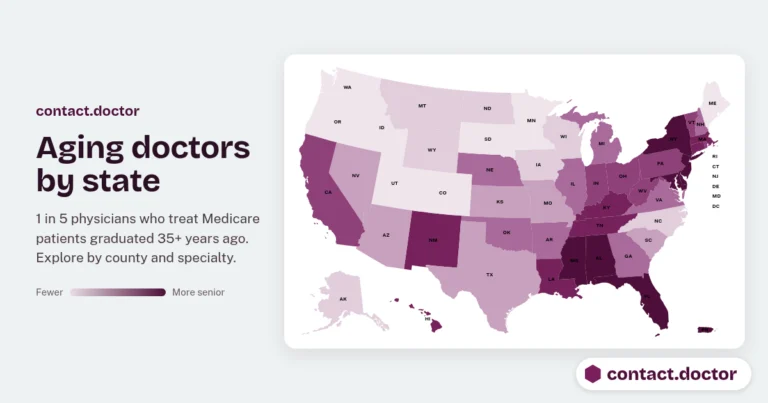
One in five U.S. physicians who treat Medicare patients graduated from medical school at least 35 years ago. See where the workforce is most…
What do Medicare patients fill most, which drugs are growing fastest, who prescribes them, and how much do drug and device companies pay clinicians? These articles use CMS Medicare Part D prescribing data, CMS Open Payments and FDA records to…

Every year drug and device makers report what they pay doctors and other clinicians. Which companies pay most, what the payments are for, and…

Every prescription pill in the U.S. carries an imprint code. How to read it, why your refill may look different, and where to check…
Cholesterol, blood pressure and thyroid drugs top the list of what Medicare patients fill. The top 25, what they cost Medicare, and who prescribes…

GLP-1 drugs such as Ozempic and Mounjaro lead the list of Medicare drugs whose prescriptions grew fastest over six years. The full list and…

Drug and device makers paid $2.10 billion to about 1 million U.S. clinicians in 2025. See payments by state, county, company, drug and payment…

Medicare covered 19.4 million GLP-1 prescriptions in 2024. Louisiana prescribes Ozempic-type drugs at nearly twice the national rate. Explore GLP-1s and 13 more drug…
Relative value units (RVUs) drive how most U.S. physicians are paid. These articles explain work RVUs, practice-expense and malpractice RVUs, the Medicare conversion factor and geographic adjustments, and show real Medicare work RVU data for every specialty and state, calculated…

How many Medicare work RVUs does a typical clinician generate in each specialty? Median, middle half and top 10% for 86 specialties, state maps…

Most physicians lose RVUs to under-coding and unbilled work, not to a lack of effort. Practical, compliant ways to capture the work you already…

A step-by-step guide to the parts of an RVU-based physician contract you can negotiate, the questions to ask, and how to sanity-check productivity targets…

RVUs are the points Medicare uses to price almost every service a physician provides. Here is how work, practice-expense and malpractice RVUs, the conversion…

How U.S. physician pay works: salary and productivity models, RVUs explained, signing and relocation bonuses, CME money, malpractice tail, loan repayment and a checklist…
Our guides explain how the U.S. health-care system works and how to use public data yourself. Learn what an NPI number is and how to look one up, how to check a doctor’s medical license and board certification, the difference…
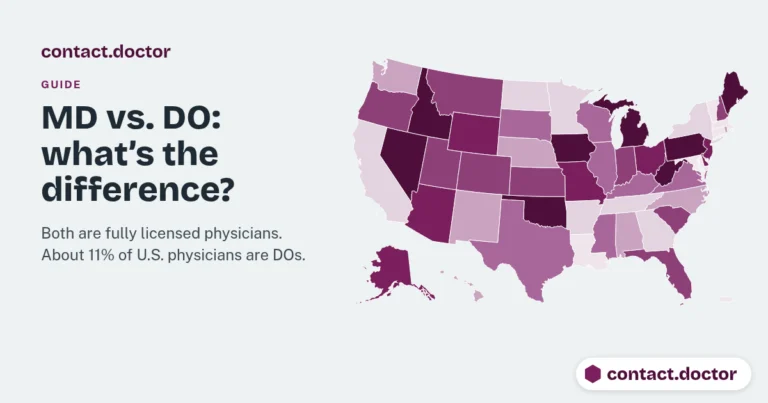
MDs and DOs are both fully licensed physicians. About 11% of U.S. physicians are DOs.

Eight states publish physician license files with first-issue dates: California, Texas, Illinois, Washington, Colorado, Connecticut, Delaware and Vermont. What other states offer, and why…
How U.S. physician pay works: salary and productivity models, RVUs explained, signing and relocation bonuses, CME money, malpractice tail, loan repayment and a checklist…

The 10-digit National Provider Identifier explained: what it is and isn't, why most doctors' NPI dates are 2005 to 2007, and how doctors, insurers,…
Residency and fellowship decisions shape a physician’s whole career. These guides help medical students, residents and fellows make them with real data instead of rumor: how long training takes in each specialty, which hospitals train the most residents and fellows,…

From three years in family medicine to seven or more in some surgical fields: how long training takes after medical school in every physician…

How to compare locations and offers for your first attending job: local demand, shortage-area incentives, practice types, RVU targets and contract terms.
The questions to ask program directors and residents, the questions they will ask you, and the public data to check before interview day.
Program websites and interview days show a program at its best. Public data shows patient volume, hospital quality, local demand and where graduates practice.
Access to health care in the United States depends heavily on where you live. These articles map the gaps: federal Health Professional Shortage Areas for primary care, dental and mental health care, counties with no psychiatrist or no physician at…
Millions of Americans live in federally designated shortage areas for primary care, dental or mental health care. A county map, what designation means, and…

One in seven Americans has a disability, and one in three people over 65. A county map by type and age, and how many…
1,611 U.S. counties, home to 26.3 million people, have no psychiatrist. Psychiatric nurse practitioners now outnumber psychiatrists. Map by county and state.

An interactive map of doctors per capita by county and state for the whole U.S. Choose any physician specialty to see where care is…
Choosing a medical school and a specialty are two of the biggest decisions in a medical career. These articles give premeds and medical students the numbers behind those choices: how many physicians practice in each specialty and how fast it…

Some medical schools send most graduates to practice in a single state; others spread them nationwide. See each school’s alumni map and specialties.

Shadowing and rotations tell you what a specialty feels like. Public data tells you how big it is, how long the training is, who…
MDs and DOs are both fully licensed physicians. About 11% of U.S. physicians are DOs.